Loading... Please wait...
  • $30.69 Hem Miracle Cream
    How does Hem-Miracle Cream Work? We developed a special formula designed to ease the topical symptoms of Hemorrhoid suffering.  It brings quick relief to ease that maddening itching, burning, and pain.  The...
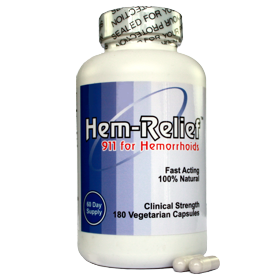
  • $40.94 Hem Relief
    Hem-Relief is the most effective hemorrhoids treatment available. Hem-Relief works fast to treat hemorrhoids at the source.  Our proprietary formula is proven to heal and strengthen damaged vascular tissue,...
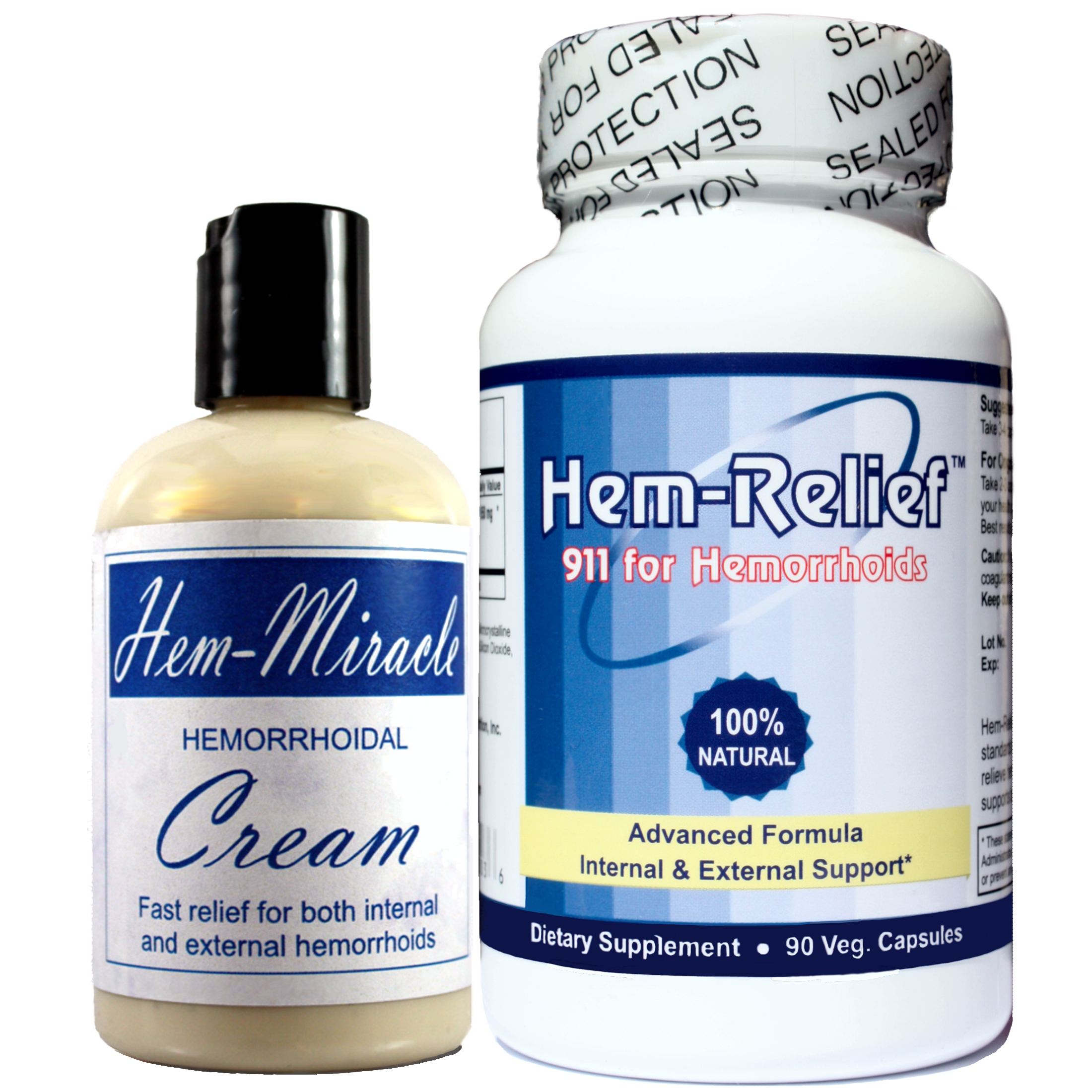
  • $66.51 Hem Miracle + Relief
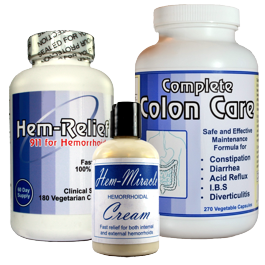
    Hem Miracle + Relief has been scientifically developed to provide both immediate relief as well as an effective, long term solution for healing damaged veins caused by hemorrhoids.Both products use only the highest quality...
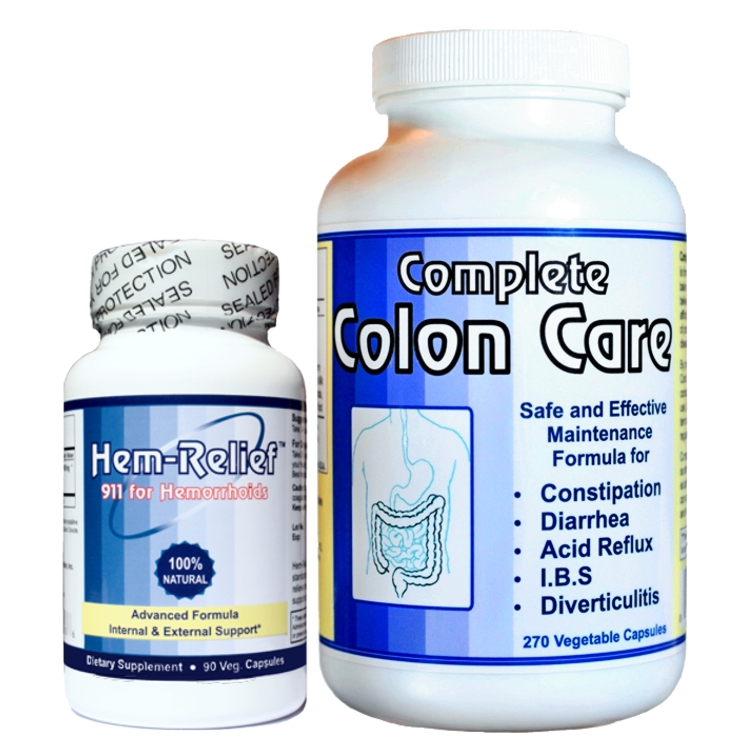
  • $71.63 Colon Care Combo
    For those customers who potentially developed or aggravated their current hemorrhoids due to constipation and straining, we highly recommend taking advantage of our Complete Colon Care formula (either powder or capsules) in...
  • $30.69 Hem Aid
    Hem-Aid is an specifically designed to improve circulatory issues that can cause:  Hemorrhoids, Varicose veins, Spider veins   Many customers have found benefits with other circulation...

Hemorrhoids

Are you suffering from painful, itching hemorrhoids? Would you like to know how to prevent flare-ups in the first place? Select one of the products listed above for complete details. 

What are Hemorrhoids?

 Overview  Risk Factors
 Signs and Symptoms  Complications
 Causes  Exams and Tests


Overview

Hemorrhoids are enlarged blood vessels located inside or outside the anus.

Internal hemorrhoids  occur inside the rectum below the anus lining. If they are ruptured which usually happens from bowel movements, bleeding will occur.

External hemorrhoids develop near the anus, they are covered by a thin layer of skin. Bleeding can occur if they are ruptured.

There is the strong possibility that you have hemorrhoids if you are experiencing itching in the anal area, a protruding lump, bleeding during a bowel movement or localized pain.

Other conditions such as anal fissures are often incorrectly associated with hemorrhoids. Bleeding could be as a result of this condition and treatment should be specific to that condition.

It is estimated that 10,000,000 Americans between the ages of 35 and 65 suffer from this condition and that as much as 80% of Americans will experience hemorrhoids at least once in their lives.  Hemorrhoids afflict both men and women, and although not as common, may be found in children as well. For the majority who have hemorrhoids, there is a very high probability that the condition will recur.

Hemorrhoids is a common condition but many of us do not know the correct spelling. Here are some common variations - hemorroids, hemmoroids, hemroids, hemeroids, hemmroids, hemmeroids, haemorrhoids , hemoroids, hemmoroids, hemrroids, hemorroides.

 Table1.JPG

The symptoms of hemorrhoids can be unpleasant even for mild conditions.  Hemorrhoids are basically a varicose vein in the anal area.  It is safe to say that people who have a history of varicose veins in the family are more at risk for hemorrhoids.  Left untreated, a mild condition can progress to a severe episode in just a few hours.  While doctors usually do not consider hemorrhoids to be a serious condition, in their worst form they can lead to extreme blood loss, and tend towards infection, both of which in rare cases can be life-threatening.

Suffice it to say for anyone who has suffered with the condition, it is not something you want to endure.  Hemorrhoids can be internal, external or both.  In the extreme case, sometimes referred to as (Stage 4 Hemorrhoids), the hemorrhoid can become thrombosed.  

 Back to Top 

Exams.JPG Signs and Symptoms

Some people actually suffer with hemorrhoids and never know it unless a doctor’s exam reveals their presence.  Almost always the ‘silent’ types of hemorrhoids are internal, and may present no discomfort to the individual.  But for the majority, the signs and symptoms are overt, and often progress in severity over time.  For many people the first symptoms may be revealed as a tinge or pinching in the anal area.  Sometimes the first sign can be blood or ‘spotting’ in the undergarments or blood in the stools.  Anyone who notices blood from the anal area is advised to see a doctor to be sure of a diagnosis.  Bleeding can relate to other health problems, and one needs to be sure of a firm diagnosis of hemorrhoids and not something more serious.   Sometimes hemorrhoids manifest themselves by partially blocking the anus, and interfering with evacuating the bowels.  Occasionally, feces with an odd shape are the first clue that something is not right.  Again, a doctor’s exam would be advised.

Other symptoms that may accompany hemorrhoids besides bleeding can be:

  • Itching
  • Extreme pain
  • Seepage of pinkish fluid
  • Feelings of incomplete evacuation after a bowel movement

Stomach or digestive upset, diarrhea, constipation, hard feces, and cramping may accompany Hemorrhoids as well. Sitting, standing, walking, exercise or lying down can become extremely uncomfortable.   Bowel movements in advanced cases can be excruciating leading to sweating, feelings of faintness or nausea, and sometimes muscle spasms can appear in the small of the back after using the toilet.  It can take hours for the pain to subside after passing stools.  Severe blood loss can add to the symptoms of nausea and feelings of being faint.

 Back to Top 

causes  Causes

There are many factors that contribute to hemorrhoids. Probably the most common consist of:


Factors1.jpg

Lifestyle factors:

  • Dietary intake (excessive intake of animal products high in protein and fat that tax the digestive system, sugar and carbohydrates)
  • Job conditions that  require sitting for long periods of time
  • Pregnancy


Physical actives:

  • Weight lifting
  • Riding bicycles long distances
  • Distance running

Hemorrhoids are especially common for activities that generate friction or cause straining.

Other factors that relate to physical causes of hemorrhoids can be straining during bowel movements, and sometimes just a genetic predisposition to hemorrhoid suffering. Hemorrhoid problems are often shared by other family members. 

Circulatory diseases and disorders are a major source of Hemorrhoids.  Diabetes, and Arterial Sclerosis, can be contributory factors in Hemorrhoid symptoms.  Also, those prone to varicose veins are more likely candidates for Hemorrhoids than people who have good circulation.  Additionally, some believe that parasites can cause varicose veins and Hemorrhoids. 

People who have colon problems probably represent the majority of people afflicted with Hemorrhoid attacks.  Poor bacterial balance is likely the root cause of Hemorrhoids.  Improper balance of flora or good bacteria versus bad can cause other colon problems such as constipation, diarrhea and I.B.S., all of which may also add to the pain and symptoms of Hemorrhoids.  Other colon problems that may lead to Hemorrhoids are gastritis, acid reflux, and Candida yeast infection.

Lastly, diet and medications can lead to Hemorrhoid problems and even impede the ability to properly heal.  Some blood pressure medications are well known to produce side effects, including Hemorrhoids.  Additionally some pain killers can slow recovery from a bout of Hemorrhoids.  Some of the other usual suspects known to promote Hemorrhoids are; stool softeners, antibiotics, and overuse of laxatives.  Some of the dietary recommendations for foods to avoid and often promoting of Hemorrhoids are; alcohol consumption, high carbohydrate diet, and insufficient fiber. 

 Back to Top 

 risks   Risk Factors

For people who have internal Hemorrhoids, accompanied by little or no pain, there is very little risk associated with their condition.  For more pronounced conditions with stronger hemorrhoid symptoms of pain, swelling, bleeding, seepage and discomfort, there are some risks that come with that level of suffering.  Suffering with any pain, or debilitating condition can create stress, and impair immune function.  When bleeding is present with hemorrhoids, the vascular system may be exposed to pathogens, toxins, and bacteria such as e-coli which may further degrade ones health.  Some in the field of health consider that bleeding Hemorrhoids may lead to systemic Candida by exposing a damaged vein to allow Candida yeast to penetrate.

Another risk of hemorrhoids not often acknowledged is that a person with Hemorrhoids may actually cause themselves to be constipated through the aversion of the pain that comes with having a bowel movement.  The problem here is that stools can become harder, making the inevitable eventual bowel movement more damaging and painful to the hemorrhoids.  Especially, in individuals who tend towards constipation, they need to be aware that unless that problem is overcome, they may become prone to other types of colon problems such as anal fissures.  It is quite common for constipated people to suffer with anal fissures and hemorrhoids concurrently.

In the extreme, hemorrhoids can lead to severe blood loss, and become abscessed.  Anyone who has these symptoms, or sees their symptoms become more severe, needs to seek medical attention as soon as possible.

Back to Top 

 complications  Complications 

The complications associated with hemorrhoids are many.  Just having them, in their painful form, can impact almost every aspect or your daily activities. Physical movement can become constrained and it can become impossible to find a comfortable position.  Passing stools may present extreme discomfort and possibly bleeding.  Symptoms may include digestive upset, nausea, and feelings of being faint.  Many of the popular topical remedies, prescription or otherwise, may do little to ease the pain and discomfort of hemorrhoids. 

Surgery may actually present its’ own set of complications.  While there are many types of surgical options, none can guarantee that hemorrhoids will not return.  If fact, surgery may set a person up for more problems in the future.  It is not uncommon for someone to undergo surgery, find themselves incapacitated for several weeks during recovery, only to find their hemorrhoids have returned again just a few weeks later.

 Back to Top 

tests  Exams and Tests 

Many people may start with a self examination when the first symptoms of hemorrhoids appear.  If they are manifest externally, nine times out of ten it will just be hemorrhoids, but confirmation through a visit to your doctor would still be advised.  Self diagnosis can lead to mistakes, especially when internal problems present themselves.  Most commonly, people self diagnose hemorrhoids, only to find later they in fact have anal fissures or both.  Other more serious problems can be confused with hemorrhoids including colon polyps, and cancerous growths.  Just another reason why it is advisable to get a least one medical opinion, and in extreme cases, a second opinion would sometimes be advisable.  On a final note, one must consider their options carefully.  If you are considering surgical options, do not rush to judgment.  Surgery really should be the option of last resort.  Many of the other common approaches to treatment are ineffective and may actually prolong an episode. Consider that there is at least one very effective natural treatment as with the Hem-Relief supplement sold in capsule form.  We highly recommend it as a reliable and safe way of dealing with all hemorrhoid problems.

 Back to Top 

check1.jpgRelated to Hemorrhoids
hemorrhoids treatment, external hemorrhoids, internal hemorrhoids,
rectal bleeding, constipation, candida